Langford adopted two transportation blueprints. The price tags are now on paper
Council removed a contested Hoffman Avenue road link. The adopted plans also map more than $60 million in road work and more than $74 million in active-transportation projects.
By The Westshore · Sep 16, 2026 · 3 min readCorrection?
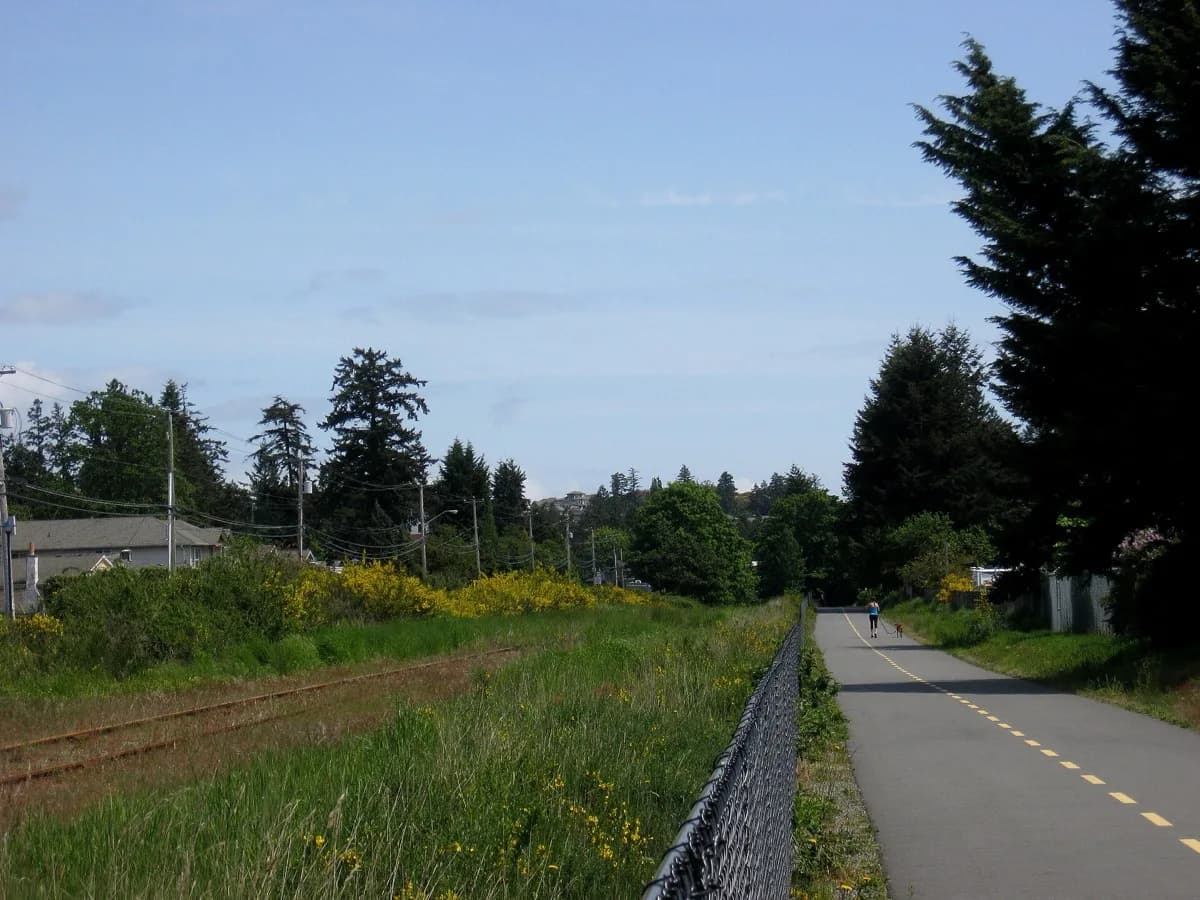
The E&N Rail Trail in Langford, one part of the city’s wider transportation network.0. Photo. · Image source · Licence
Langford has adopted its first Transportation Master Plan and a companion Active Transportation Plan. Together they turn years of argument about traffic, buses, sidewalks and bike routes into official city policy.
They do not turn every line on the maps into a funded construction project.
That distinction is the most useful way to read the two plans. They contain timelines, partners and Class D cost estimates, but delivery still depends on budgets, grants, development and detailed design.
The connection council removed
Nearly 30 people spoke at the July 20 council meeting. Before adopting the plans, council removed the proposed road connection between Hoffman Avenue and Gardner Creek Place.
The city says that connection will stay out pending more information about future intersections or road links serving Mill Hill. The decision does not close every transportation question in the neighbourhood. The adopted plan still identifies work around Veterans Memorial Parkway and Hoffman Avenue, including a medium-term intersection project estimated at $275,000.
What residents stopped was the new through-connection shown in the draft plan, not every future change near Hoffman.
What the plans actually cost
The road plan estimates approximately $8.7 million for selected city capital projects and another $51.9 million for projects tied to development or outside funding. That is more than $60 million in concept-level work.
The active-transportation plan estimates approximately $11.6 million for selected capital projects and another $62.8 million connected to development or external funding, for more than $74 million.
Those totals should not simply be added together as a single city bill. The plans overlap, many projects rely on partners or developers, and the estimates are not construction bids.
The active-transportation estimates include 20 per cent for engineering, 15 per cent for inflation and a 10 per cent contingency. They exclude property acquisition and other major impacts. Actual costs will be set through design and procurement.
What could move first
The active-transportation plan defines short term as one to five years. It identifies quick-build candidates that could move within one or two years, including:
extending the Happy Valley Road multi-use pathway south from Lobo Vale;
using asphalt and temporary curb separation to improve Setchfield Avenue;
traffic calming and lower-speed neighbourhood bikeways in City Centre and Mill Hill; and
temporary walking improvements on Glen Lake Road before a permanent sidewalk.
The plan also assigns short-term priority to several City Centre accessibility upgrades and protected cycling work. More complex projects, such as a Highway 1 active-transportation overpass and an E&N Rail Trail extension, sit on longer timelines even when the plan rates them highly.
The E&N Rail Trail in Langford. Photo: John Newcomb / Wikimedia Commons, CC BY 3.0.
The target behind the projects
Langford's planning goal is for 42 per cent of trips to be made by walking, rolling, cycling or public transit by the time the city reaches 100,000 residents. The active-transportation plan says the present share is 13 per cent.
That is a large change. Adopting the plans establishes the direction and gives the city stronger material for grant applications. It does not fund the gap between 13 and 42.
The records worth watching next are the annual budget, grant applications, design contracts and the transportation report card the plan recommends. Those will show which lines on the map become work on the ground.